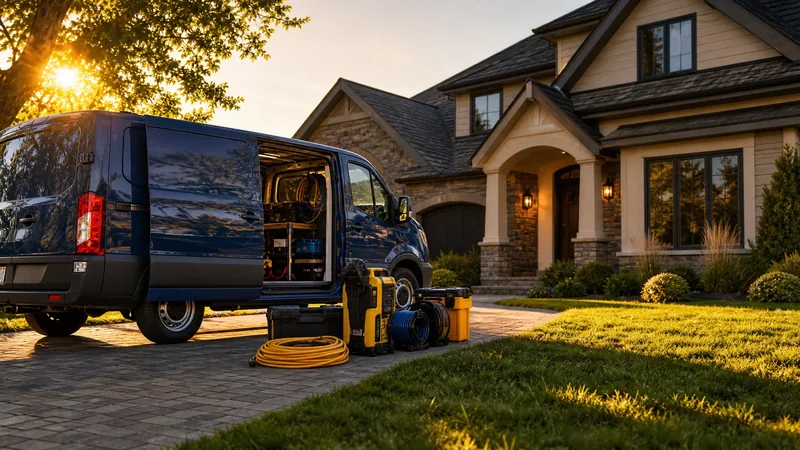
How to Start a Pest Control Business in Minnesota: MDA Structural Pest Control License
How to Start a Pest Control Business in Minnesota: MDA Structural Pest Control License
If you plan to apply pesticides for hire inside or around buildings in Minnesota, you need a structural pest control license from the Minnesota Department of Agriculture (MDA). That license is separate from the commercial applicator license that lawn care companies usually carry, and the two cannot stand in for each other. The Minnesota pest control license process has several parts: an entity filing, a tax registration, licensed staff, a business application, and local permissions. Each part has its own fee and its own agency.
This guide puts those parts in order so you can work through them without backtracking. It covers the structural license under Minn. Stat. 18B.32, the commercial applicator license under Minn. Stat. 18B.33, and the state filings that surround them.
Informational content, not legal or tax advice. Licensing rules, fees and forms change. Confirm current figures with the MDA and the other agencies named here before you file, and talk to a qualified attorney or CPA about your entity, tax and insurance choices.
Structural license versus commercial applicator license
Minnesota treats pesticide work for hire in two ways. Applying pesticides to structures requires an MDA structural pest control license under Minn. Stat. 18B.32. Other pesticide work, such as lawn and ornamental care, falls under the commercial applicator license in Minn. Stat. 18B.33. Holding one does not cover the other.
Sort your planned services before you file anything. Treatments inside a home, office or other building, and work on the building and its immediate exterior, are structural work. A company that only treats turf and landscape beds is generally in commercial applicator territory. If your service menu includes both, you will need both licenses, each with its own exam and fee. Confirm with MDA where your specific services fall.
What you need before you apply
Gather these items before you start the paperwork. Missing any one of them will stall the application.
- A chosen legal name and business entity. If you form an LLC or corporation, that filing goes to the Secretary of State (Step 2).
- A Minnesota Tax ID, and a sales and use tax account if you will make taxable sales (Step 3).
- A licensed master. Your business must either be a licensed master or employ one.
- Applicants who are 18 or older, each prepared to pass a closed-book exam.
- Application fees of $200 for the business, plus $50 for each employee's individual license.
- Proof of financial responsibility ready to send when MDA asks for it: $50,000 in net assets, or a bond or insurance in the amount MDA sets.
- Local permission from the city, county or township where you will operate.
- Operating records, including a service log, a product inventory and your label and safety data sheet files. These are not part of the license filing, but you will need them from the first job.
Step 1: Pick the license categories you need
MDA issues three structural categories: master, journeyman and fumigator. The master category is the one your business must hold or employ. A master needs two years as a licensed journeyman, so plan that timeline before you promise a start date. The fumigator category covers fumigation work. If you intend to fumigate, confirm with MDA which category applies to that work.
Every category requires passing a closed-book exam. Decide early who will take which exam. Your first licensed master controls when the business can begin structural work, so this decision drives your launch date more than any other.
Step 2: Form your business and file any assumed name
Minnesota does not license the business entity itself. Filing an LLC with the Secretary of State is a filing, not a license, and it does not replace any step in this guide.
For an LLC, file Articles of Organization under Minn. Stat. Chapter 322C. The current fee is $155 online or in person, which is expedited service, or $135 by mail, which is not expedited. The name must include the words “limited liability company” or the abbreviation “LLC,” and it must be distinguishable from every Minnesota entity already on file. Search the records at mblsportal.sos.mn.gov before you commit to a name. LLC and corporation formation does not require newspaper publication.
Once formed, an LLC files an Annual Renewal every year. The fee is $0 if the entity is active and in good standing, but the filing is due December 31. Miss that date and the LLC is terminated without further notice. Reinstatement costs $65 by mail or $85 online or in person. Put the December 31 deadline on your calendar on day one.
If you will operate under a name other than your legal name, file a Certificate of Assumed Name, commonly called a DBA, with the Secretary of State's Business Services office. It costs $50 online or in person, or $30 by mail. After filing, the certificate must be published for two consecutive issues in the legal notices section of a qualified newspaper in the county of your principal place of business. Failure to publish may make the certificate invalid. The certificate must be renewed each year at no charge. The filing page is sos.mn.gov.
Step 3: Register for taxes with the Department of Revenue
Register with the Minnesota Department of Revenue at revenue.state.mn.us to get a Minnesota Tax ID and, if your sales are taxable, a sales and use tax account. Registration must be in place before you make any taxable sale. It is a tax registration, not a license, so it does not satisfy the structural license requirement.
Confirm with Revenue whether your pest control service charges are subject to sales tax. Do not assume either answer. The state sales tax rate is 6.875 percent, and local taxes can add to it.
Your tax structure also matters. An LLC taxed as a partnership or disregarded entity passes income through to its owners, who pay the individual income tax of 5.35 to 9.85 percent. An LLC taxed as a C corporation pays the 9.8 percent corporation franchise tax. A minimum fee under Minn. Stat. 290.0922 applies to C corporations, S corporations and partnerships, while single member LLCs that report only on the owner's individual return are exempt. Ask a CPA which treatment fits your entity.
Step 4: Get your people licensed
Start with the master. Your business must be a licensed master or employ one, and a master needs two years as a licensed journeyman first. If you are the first applicant, your own experience and training history determine how soon you can apply for the master category.
Every individual applicant must be 18 or older and pass the closed-book exam for the category they seek. Each employee's individual license costs $50. Licenses expire on December 31 and cannot be transferred, so a license belongs to the person who earned it and does not move with a business sale or a change of employer. Check with MDA for exam scheduling, study materials and any exam fees, because exam availability can set your opening date.
Step 5: File the structural business application
The MDA business application for a structural pest control license costs $200. List your licensed master on the application and confirm that the master's license is active before you submit. Confirm with MDA which forms, supporting documents and processing timelines apply, and check the MDA site at mda.state.mn.us for current forms.
Structural work for hire requires the license. Schedule your first paid service for after the license is issued, not after you submit the application.
Step 6: Prepare proof of financial responsibility
MDA may ask for proof of financial responsibility. You can show $50,000 in net assets, or provide a bond or insurance in the amount MDA sets. Which option fits your situation, and what amount applies, is for MDA to determine. Confirm the requirement with MDA before you buy a bond or policy so you do not overpay or underinsure. Keep the proof in your records so you can send it quickly when requested.
Step 7: Check local licenses and zoning
Minnesota issues no general statewide business license. Licensing is organized by trade or activity, and cities and counties add their own rules on top. The state has 87 counties, about 853 cities and about 1,780 townships. Minneapolis and St. Paul license by category, and neither issues a general business license. Some cities regulate pesticide applicators or require a category-specific license, so check with the city or county clerk where you will work. If you are in a township, ask the township about its rules as well.
If you keep product or equipment at a home office or rented space, ask the local zoning office whether that storage is allowed at the address. Zoning questions are local, and the answer can differ between two neighboring cities.
Step 8: Add the commercial applicator license if you need it
If your plan includes lawn, turf, ornamental or other non-structural work, you need a commercial applicator license under Minn. Stat. 18B.33. The license costs $50, requires a core exam plus a category exam, and expires December 31. Renewals filed after March 1 carry a 50 percent penalty. Fees are stated as of 2026, so confirm the current amounts at mda.state.mn.us before you budget.
Step 9: Build a renewal calendar
Structural licenses expire December 31. Renewal is by recertification workshop or by reexamination. If a license has been lapsed for more than three months, MDA treats it as new, which means the holder goes back through the process rather than simply renewing. Confirm the workshop schedule and any credit rules with MDA.
Plan the renewal path in the fall, not in December. A single missed workshop can leave your licensed master without a valid license, and that puts the whole business at risk.
Materials and equipment for day one
The license is the gate, but the work still needs equipment and records. Expect to have the following in place before your first job:
- Application and safety equipment that matches the products you plan to use, and a storage plan that follows each product label.
- Current product labels and safety data sheets for every product in your inventory, kept on file and accessible to technicians.
- A service record template that captures the site, the product, the rate, the date and the technician's license number.
- A written treatment and follow-up plan you can explain to customers in plain language.
What to expect once you are licensed
A structural license authorizes your business to apply pesticides for hire to structures under state rules. It is not a guarantee of any result on a customer's property. Pest activity depends on the species, the building, the product label, the condition of the structure and whether the customer follows the follow-up plan. Many owners find that a documented inspection and treatment plan makes results easier to track and explain, and it may help customers understand what a visit can and cannot address. Describe your services as treatments and inspections, not as cures.
Common mistakes to avoid
- Assuming a commercial applicator license covers structural work. The two are separate licenses under separate statutes.
- Using a DBA without publishing it. Failure to publish may make the certificate invalid, and you will have a name on paper that does not hold up.
- Missing the December 31 LLC renewal. The fee is $0, but a missed filing terminates the LLC and reinstatement costs $65 by mail or $85 online or in person.
- Treating tax registration as a license. Registering with Revenue is required before taxable sales, but it does not replace the MDA license.
- Letting the master's license lapse. Because the business must be or employ a licensed master, a lapse affects the whole company.
- Hiring before checking age and exam status. Applicants must be 18 or older and must pass the exam for their category.
- Assuming a state license is enough for a city. Minneapolis, St. Paul and many other cities have their own category rules.
- Expecting a license to transfer when you sell the business. Licenses are not transferable, so a buyer must obtain its own.
Tips from people who have filed the paperwork
- Schedule exams for your first licensed master before you sign a lease or buy a van. The exam calendar is often the longest lead time in the whole process.
- Build a single folder with your entity filing, Tax ID, licenses, insurance or bond proof, and city permits. You will need each item at a different point, and the folder saves time at every one.
- Ask MDA, Revenue and your city clerk for written answers on any question that affects your pricing or service mix. Written answers protect you if a question comes up later.
- Get a CPA to review your entity and tax choice before you file the LLC or start invoicing. Changing it after you have customers is harder.
- Check with an insurance agent about the coverage your clients and contracts require, then compare that against the MDA proof of financial responsibility requirement.
Minnesota pest control license fee summary
| Item | Fee | Notes |
|---|---|---|
| Structural pest control business application | $200 | MDA. Confirm current forms and timelines. |
| Individual license for each employee | $50 | MDA. Applicants must be 18 or older. |
| Commercial applicator license | $50 | MDA. Core plus category exam. Expires December 31. |
| LLC Articles of Organization | $155 online or in person; $135 by mail | Secretary of State. Online and in-person filings are expedited. |
| LLC Annual Renewal | $0 | Due December 31. Late filing terminates the LLC. |
| LLC reinstatement | $65 by mail; $85 online or in person | Secretary of State fee schedule. |
| Certificate of Assumed Name (DBA) | $50 online or in person; $30 by mail | Publish two consecutive issues. Renew yearly at no charge. |
| Proof of financial responsibility | $50,000 net assets, or a bond or insurance set by MDA | Provided on request. Confirm the amount with MDA. |
| Exam and recertification workshop fees | Not stated here | Check with MDA before budgeting. |
| State sales tax rate | 6.875% | Plus local taxes. Confirm taxability with Revenue. |
Next steps
Start with the questions that set your timeline: which services you will offer, which categories you need, and who your licensed master will be. Then file the entity, register with Revenue, schedule exams, submit the MDA application and line up local permissions. Work through each step in the order above and confirm any figure marked for confirmation before you pay it.
Disclaimer: This article is informational content, not legal or tax advice. It does not replace guidance from the Minnesota Department of Agriculture, the Secretary of State, the Department of Revenue or your local government. For decisions about your entity, taxes, insurance or contracts, consult a qualified attorney or CPA.
Keep exploring: related Minnesota guides
- How to Start a Lawn Care Business in Minnesota
- How to Start a Tree Service Business in Minnesota
- How to Start a Junk Removal Business in Minnesota
- Minnesota Contractor License Guide
- How to Start an LLC in Minnesota
- Minnesota Business License
- How Much Does It Cost to Start a Business in Minnesota
- All Minnesota business types
- Every Minnesota guide in one place